Friday, December 16, 2016

What happens in the extremely unlikely scenario the Electoral College goes rogue?

Image result for electoral college mapDonald Trump is busy building his Cabinet and planning his agenda, but he isn't really, officially going to be President quite yet. One of the peculiarities of American democracy is that it's actually a group of 538 "electors" -- members of the Electoral College -- in this nation of 318 million who actually pick the president.

They'll do it, meeting in their respective states, on December 19th. The outcome is a foregone conclusion, but there is room, however small, for a surprise: an uprising, as called for by some Democrats and even some Republicans, of "faithless electors."

None of the electors are constitutionally bound to follow the will of the people they represent, and so in this bizarre election (and post-election) season, an arcane system that was established at the Constitutional Convention of 1787 could -- and this is very unlikely, but could legally -- go rogue and potentially deny Trump the presidency.

Friday, November 4, 2016

College-educated white women are Hillary Clinton’s firewall

THE BIG IDEA: One in five voters in 2012 were college-educated white women. Mitt Romney won them by six points, according to exit polls.
Our fresh Washington Post-ABC News Tracking Poll, which has Hillary Clinton ahead by just two points among all likely voters nationally, finds that Donald Trump is losing college-educated white women by 27 points.
If the Republican nominee were anywhere close to Romney’s 52 percent support level among this traditionally Republican-leaning constituency, he would likely win the election. But drilling into the crosstabs of our polling and reviewing credible, state-level data demonstrate how highly unlikely it is that this constituency will waver in the final days. It is one of the reasons that, even though the race has tightened pretty dramatically, Clinton retains a significant structural advantage.
The gender gap is nothing new. Democrats tend to perform exceptionally well with unmarried and minority women. A Pew study in July found that there was no difference in candidate support between men and women in 1972 and 1976, but since 1980 women writ large have preferred Democratic presidential candidates by an average of eight points.
Our national tracking polling shows that the race has moved back toward something close to this historic norm. Men prefer Trump by 11 points (51-40) and women prefer Clinton by 11 points (52-41).
Clinton is ahead only 11 points among women overall because Trump is running up his margin among white women without college degrees. They favor him by 28 points, 61 percent to 33 percent, despite the dozen women who have now come forward publicly to accuse him of sexual misconduct.

But the preference for Clinton among college-educated, white women matters a great deal because they habitually turn out to vote at higher rates than almost every other group of voters, including less-educated women. So, in an election with lagging enthusiasm, this constituency packs a bigger punch.

Saturday, February 27, 2016

The Endorsement Primary

Before any votes are cast, presidential candidates compete for the support of influential members of their party, especially elected officials like U.S. representatives, senators and governors. During the period known as the “invisible primary,” these “party elites” seek to coalesce around the candidates they find most acceptable as their party’s nominee. Over the past few decades, when these elites have reached a consensus on the best candidate, rank-and-file voters have usually followed.
READ MORE HERE

Monday, February 22, 2016

A background guide to “Brexit” from the European Union

IN EARLY 2015 the chances of ”Brexit”— Britain departing from the European Union—seemed remote. Today, largely because of Europe’s migration crisis and the interminable euro mess, the polls have narrowed. Some recent surveys even find a majority of Britons wanting to leave.
David Cameron, Britain’s Conservative prime minister, is partly responsible. Although he has repeatedly urged his party to stop “banging on about Europe”, his Eurosceptic backbenchers, scared witless by the rise of Nigel Farage’s virulently anti-EU UK Independence Party (UKIP), have constantly hassled him to adopt a tougher line with Brussels. His response has generally been to appease them. One early morsel he threw them was the 2011 European Union Act, which requires any EU-wide treaty that passes substantive new powers to Brussels to be put to a British referendum. That sounded like a big concession, but no new treaties were then in prospect. In January 2013, Mr Cameron promised that, if the Tories were re-elected in May 2015, he would renegotiate Britain’s membership and hold an in-out referendum by the end of 2017.

Following his election victory in May 2015, the prime minister claimed to have embarked on a renegotiation to fix what he says is wrong with the EU. Yet he was deliberately vague about what changes he wants, partly for fear that if his shopping list leaks Eurosceptics in his own party will rubbish it as inadequate. At the European summit on October 15th-16th, however, he was told by his fellow heads of government to produce a list of precise demands in November if there was to be any chance of the negotiations being concluded, as he at one time hoped, at the December European summit. He did produce a list of demands but a deal still eludes him. The prime minister is now hopeful of getting an agreement by the end of February.

Saturday, February 13, 2016

Can Republicans really block Obama’s Supreme Court nomination for a year? Probably.

Come January 2017, Republicans have a chance at controlling the House of Representatives, the Senate and the White House.
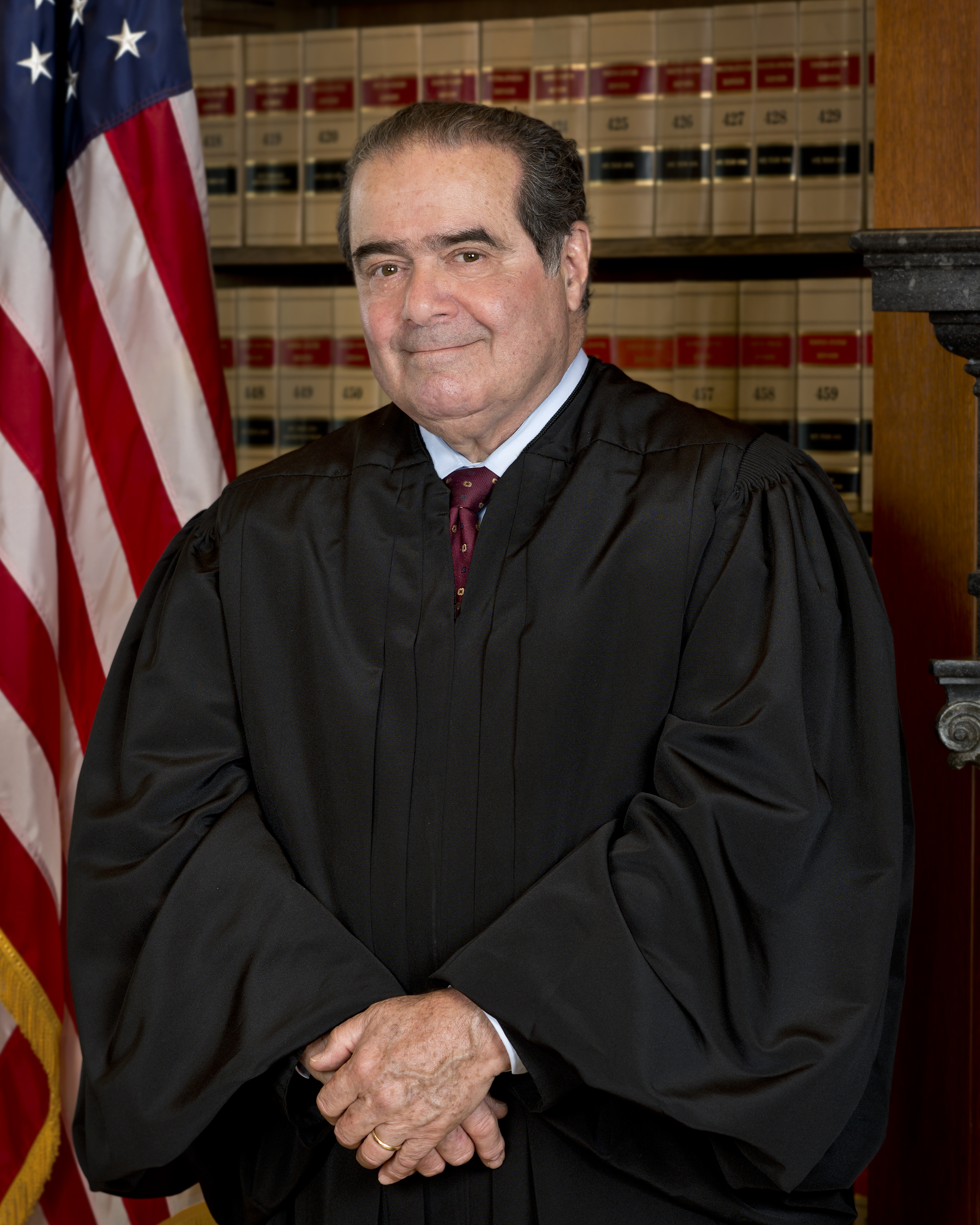
So it stands to reason that Republicans have very little incentive to even consider President Obama's suggestion for who should replace Justice Antonin Scalia, who died Saturday.
There's some historical precedent for them to do just that. A hazy rule dating back decades that congressional experts say is really more of a tradition suggests senators of the opposition party of the White House can oppose some judicial nominations in the months before a presidential election.
It's known as the "Thurmond Rule," for reasons we'll get into, but there is widespread disagreement on what it even means and when it can be invoked.
"It's not a rule," said Russell Wheeler, a judicial expert with the Brookings Institution. "It's just sort of a pie-in-the-sky flexibility that both parties try to disown when it's convenient for them and try to say it means something when it's not."
Whether rule or tradition, it pops up throughout history in times like these, when a high-stakes judicial nomination collides with a presidential election.
But Wheeler and other congressional experts think the rule is less in-play now than in the past. Republicans have control of the Senate and can simply sit on the nomination if they want -- no matter how much the other side cries foul.

Wheeler said the argument they can make to do that is less about a somewhat-arcane parliamentary tradition and more about whether it's fair to consider a life-time judicial nominee by a lame-duck president before such a pivotal presidential election.
READ MORE HERE

What happens to this Term’s close cases?

The passing of Justice Scalia of course affects the cases now before the Court.  Votes that the Justice cast in cases that have not been publicly decided are void.  Of course, if Justice Scalia’s vote was not necessary to the outcome – for example, if he was in the dissent or if the majority included more than five Justices – then the case will still be decided, only by an eight-member Court.
If Justice Scalia was part of a five-Justice majority in a case – for example, the Friedrichs case, in which the Court was expected to limit mandatory union contributions – the Court is now divided four to four.  In those cases, there is no majority for a decision and the lower court’s ruling stands, as if the Supreme Court had never heard the case.  Because it is very unlikely that a replacement will be appointed this Term, we should expect to see a number of such cases in which the lower court’s decision is “affirmed by an equally divided Court.”
The most immediate and important implications involve that union case.  A conservative ruling in that case is now unlikely to issue.  Other significant cases in which the Court may now be equally divided include Evenwel v. Abbott (on the meaning of the “one person, one vote” guarantee), the cases challenging the accommodation for religious organizations under the Affordable Care Act’s contraceptive mandate, and the challenge to the Obama administration’s immigration policy.
The Court is also of course hearing a significant abortion case, involving multiple restrictions adopted by Texas.  In my estimation, the Court was likely to strike those provisions down.  If so, the Court would still rule – deciding the case with eight Justices.
Conversely, the Court was likely to limit affirmative action in public higher education in the Fisher case.  But because only three of the liberal Justices are participating (Justice Kagan is recused), conservatives would retain a narrow majority.

There is also recent precedent for the Court to attempt to avoid issuing a number of equally divided rulings.  In Chief Justice Roberts’s first Term, the Court in similar circumstances decided a number of significant cases by instead issuing relatively unimportant, often procedural decisions.  It is unclear if the Justices will take the same approach in any of this Term’s major, closely divided cases.

Replacing Antonin Scalia’s will be a profound test of the American political system

Justice Antonin Scalia's death is a test for the American political system — a test it's unlikely to pass.
The test is simple. Can divided government actually govern, given today's more polarized parties? In the past, it could. In 1988, a presidential election year, a Democratic Senate unanimously approved President Ronald Reagan's nomination of Anthony Kennedy to the Supreme Court. The Senate wasn't passive; it had previously rejected Reagan's initial nominee, Robert Bork, and his second choice Douglas Ginsburg dropped out of the running. However, it ultimately did its job — even amidst an election and divided party control of the government.
But moments after reports first filtered out of Scalia's death, and with no knowledge of who President Obama planned to name as Scalia's replacement, senior Republicans said they wouldn't even consider an appointment from Obama, despite the fact that he has almost a year left in his presidency.
Ted Cruz was first to voice this opinion, but it was Senate Majority Leader Mitch McConnell's statement that carried the most consequence. "The American people should have a voice in the selection of their next Supreme Court Justice," he said. "Therefore, this vacancy should not be filled until we have a new president."

The American people, of course, already did have a voice in the selection of Scalia's replacement. They reelected Barack Obama to office in 2012. But they also made Mitch McConnell majority leader in 2014.

Tuesday, January 5, 2016

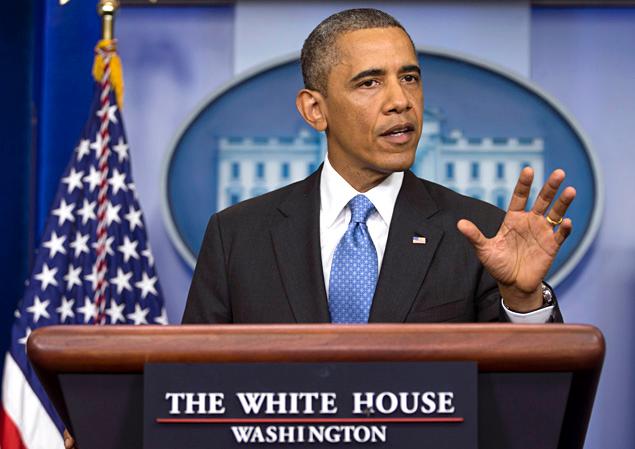
Emotional Obama calls for 'sense of urgency' to fight gun violence

CNN)President Barack Obama grew emotional Tuesday as he made a passionate call for a national "sense of urgency" to limit gun violence.
He was introduced by Mark Barden, whose son Daniel was killed in the 2012 massacre at Sandy Hook Elementary School in Connecticut. Obama circled back to that shooting in the final moments of his speech.
"Every time I think about those kids, it gets me mad," Obama said, pausing to wipe away tears.
He added: "And by the way, it happens on the streets of Chicago every day," referring to his hometown where he began his political career.
The White House is introducing a new requirement that would expand background checks for buyers. The measure mandates that individuals "in the business of selling firearms" register as licensed gun dealers, effectively narrowing the so-called "gun show loophole," which exempts most small sellers from keeping formal sales records.

Former Congresswoman and gun control advocate Gabby Giffords, who was seriously injured in a 2011 mass shooting, was also in attendance at Tuesday's event and was greeted with a standing ovation from the White House audience.

Monday, January 4, 2016

The Oregon occupiers’ land dispute, explained in 9 maps

The decision by a group of activists to seize a small, remote federal building in a corner of Oregon has roots that burrow into a lot of political and social threads. There are gun rights issues, religious overtones, broad strains of anti-government sentiment and even the tactics of the Occupy Wall Street movement.
But there's also the very particular question of how much land the government controls in the state -- the same question that animated the dispute with rancher Cliven Bundy in Nevada two years ago -- and that helped motivate Bundy's son Ammon to take a lead role in the Oregon standoff.

As we noted Sunday, the Oregon dispute began with the government's push to ensure that Dwight and Steven Hammond, a father and son who were convicted of arson in 2012, served the minimum sentences that their convictions mandated. (Both already have served time, but less than the five-year minimum.) The Hammonds set a fire in 2001 that spread out of control on federal land. The government argued that the two were trying to cover up an illegal deer hunt.

Friday, December 4, 2015

Senate Republicans Just Blocked A Bunch Of Gun Control Measures

WASHINGTON -- One day after 14 people were killed in a mass shooting in San Bernardino, California, Senate Democrats pushed through votes on measures to strengthen gun control laws. Republicans succeeded in blocking every single one.
In an effort to apply pressure on their GOP colleagues, Senate Democrats tried to change the focus of legislation aimed at repealing Obamacare and defunding Planned Parenthood on the Senate floor Thursday. Their package attempted to strip out the text of the underlying bill and replace it with three measures that would have blocked individuals on terrorist watch lists from purchasing guns, expanded existing gun background checks, and increased funding for mental health services and treatment for substance abuse disorders. 
"Our thoughts and prayers are not even close to enough. This country is dangerously close to falling into a new normal," said Sen. Chuck Schumer (D-N.Y.), the Senate's third-ranking Democrat. "Is this the kind of country we want to be? Senate Democrats are not waiting one more day."

Democrats offered the package during a vote-a-rama on the GOP Obamacare bill. While every amendment failed -- they each needed to secure 60 votes -- Schumer said earlier in the day that the point of it all was to ensure the entire country knows where every senator stands on the issue. He predicted a "good number" of Republicans were "dreading" the votes. 

Wednesday, December 2, 2015

Former intel chief says WH worried over re-elect 'narrative'

Washington (CNN) President Barack Obama's former top military intelligence official said Tuesday that the White House ignored reports prefacing the rise of ISIS in 2011 and 2012 because they did not fit its re-election "narrative."
"I think that they did not meet a narrative the White House needed. And I'll be very candid with you, they just didn't," retired Lt. Gen. Michael Flynn, the former head of the Defense Intelligence Agency, told CNN's Jake Tapper on "The Lead."
Flynn, who has been critical of both Obama's and former President George W. Bush's handling of the Iraq War and involvement in the Middle East, said that Obama was served poorly by a small circle of advisers who were worried about his re-election prospects at the time.

The story they needed to tell, he said, was that pulling troops from Iraq would not leave the region vulnerable to the rise of a radical Islamic group like ISIS.

NATO invites Montenegro to join alliance, defying Russia

NATO foreign ministers invited tiny Montenegro on Wednesday to join their military alliance in its first expansion since 2009, defying Russian warnings that enlargement of the U.S.-led bloc further into the Balkans would be a provocation.
In a scripted session at NATO's headquarters in Brussels, Montenegro's Foreign Minister Igor Luksic strode into the imposing conference hall to loud applause from his peers as NATO chief Jens Stoltenberg declared: "This is the beginning of a very beautiful alliance."

Stoltenberg said inviting Montenegro had nothing to do with Russia. But NATO diplomats have said the decision sends a message to Moscow that it does not have a veto on NATO's eastwards expansion, even if Georgia's membership bid has been complicated by its 2008 war with Russia.
Moscow opposes any NATO extension to former communist areas of eastern and southeastern Europe, part of an east-west struggle for influence over former Soviet satellites that is at the centre of the crisis in Ukraine.

Russian Foreign Minister Sergei Lavrov said last September that any expansion of NATO was "a mistake, even a provocation". In comments to Russian media then, he described NATO's so-called open door policy as "irresponsible".

Trump builds his lead, Carson falls in latest Quinnipiac Poll

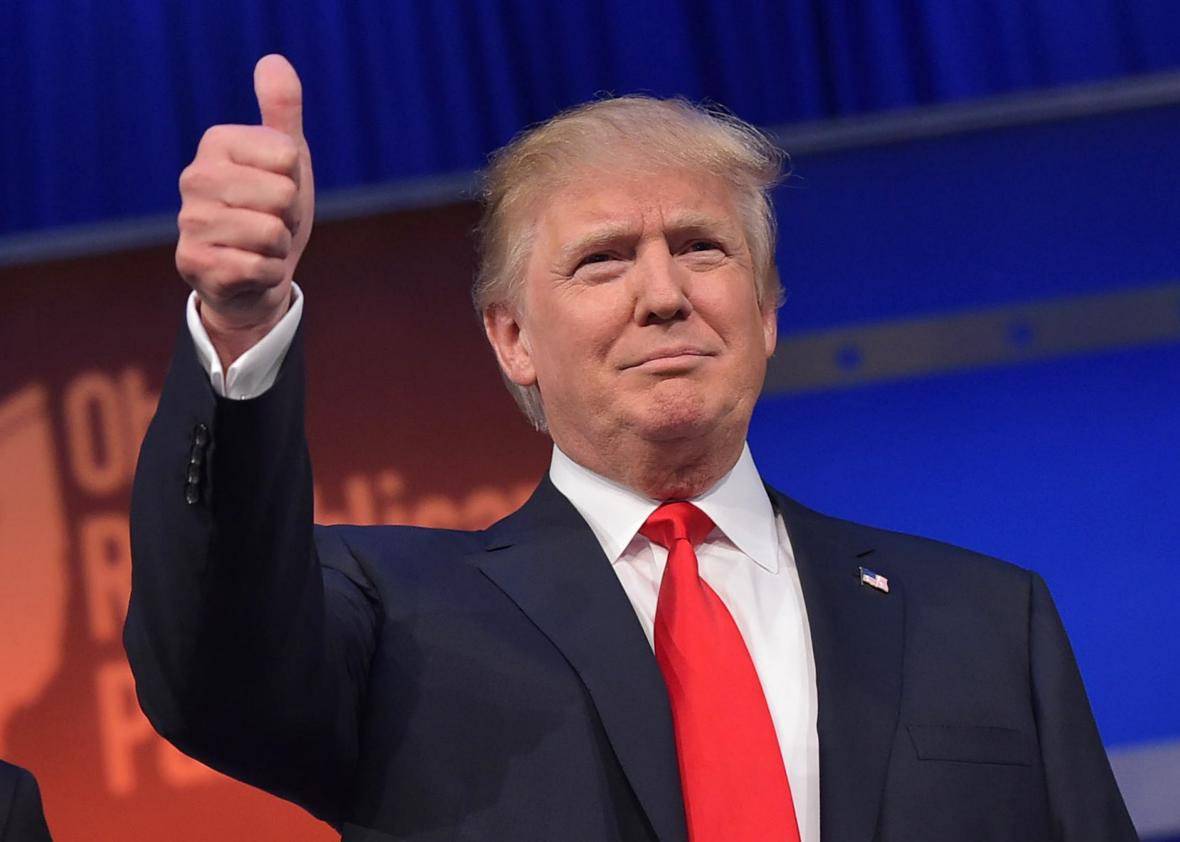
Republican Donald Trump solidifies his advantage nationally in the party's presidential race as Democratic candidate Hillary Clinton improves her showing in potential general election matchups, Quinnipiac University poll finds.
·         In contest for GOP nomination, Trump leads with 27%, followed by Sen. Marco Rubio with 17%
483208412-real-estate-tycoon-donald-trump-flashes-the-thumbs-up·         Ben Carson, Sen. Ted Cruz tied with 16%, Jeb Bush next with 5%, no other contender tops 3%
·         In comparable poll released Nov. 4, Trump and Carson were in virtual tie for first
·         Poll Asst. Director Tim Malloy sums up: "Dr. Ben Carson, moving to center stage just one month ago, now needs some CPR. The doctor sinks. The Donald soars."
·         NOTE: Much of poll taken as reports emerged that Trump had disparaged reporter by making fun of his disability

Tuesday, December 1, 2015

Are the 'overwhelming majority of violent criminals' Democrats? Ted Cruz said so

During an interview with conservative radio host Hugh Hewitt, Republican presidential candidate Ted Cruz said most violent criminals are Democrats.
It came after Hewitt brought up the shooting at a Planned Parenthood clinic that left three dead and nine injured in Colorado Springs, Colo., over Thanksgiving weekend. Hewitt told Cruz that he’d been doing anti-abortion events for 25 years and had never met "a single pro-life activist who is in favor of violence of any sort."
Cruz agreed. "And I would note that this whole episode has really displayed the ugly underbelly of the media," Cruz said. "You know, every time you have some sort of violent crime or mass killing, you can almost see the media salivating, hoping, hoping desperately that the murderer happens to be a Republican, so they can use it to try to paint their political enemies. Now listen, here’s the simple and undeniable fact. The overwhelming majority of violent criminals are Democrats. The media doesn’t report that."
We received dozens of emails from readers asking us to check the claim, so we took a closer look.

We queried the Cruz campaign, but didn’t hear back. CNN reported that Cruz’s campaign, when asked, cited research by two academics, Marc Meredith, of the University of Pennsylvania, and Michael Morse, then of Stanford University. They published a paper in the January 2014 edition of the Annals of the American Academy of Political and Social Science titled, "Do Voting Rights Notification Laws Increase Ex-Felon Turnout?"

Friday, November 20, 2015

Why the Presidency is Weak

One big thing Barack Obama has learned about being president? The job isn't as powerful as you might expect.
In a new interview with Bill Simmons at GQ, which is well worth reading in full, Obama explains that he "didn't fully appreciate" how "decentralized power is" in the US political system until he took office.
That is, to get anything done, he had to spend a ton of his time trying to persuade other people. Here's what he told Simmons:

OBAMA: What I didn’t fully appreciate, and nobody can appreciate until they’re in the position, is how decentralized power is in this system. When you’re in the seat and you’re seeing the housing market collapse and you are seeing unemployment skyrocketing and you have a sense of what the right thing to do is, then you realize, "Okay, not only do I have to persuade my own party, not only do I have to prevent the other party from blocking what the right thing to do is, but now I can anticipate this lawsuit, this lobbying taking place, and this federal agency that technically is independent, so I can’t tell them what to do. I’ve got the Federal Reserve, and I’m hoping that they do the right thing—and by the way, since the economy now is global, I’ve got to make sure that the Europeans, the Asians, the Chinese, everybody is on board." A lot of the work is not just identifying the right policy but now constantly building these ever shifting coalitions to be able to actually implement and execute and get it done.

House Votes To Increase Security Checks On Refugees From Iraq, Syria

The House of Representatives has easily passed a GOP-authored bill to restrict the admission of Iraqi and Syrian refugees to America by requiring extra security procedures.
Speaker of the House Paul Ryan holds up statements from the FBI director and the secretary of Homeland Security about the risk involved in admitting refugees from Syria, during a news conference Wednesday about the House bill calling for a stricter vetting process for refugees from Syria and Iraq.The bill — called the American Security Against Foreign Enemies Act of 2015, or the American SAFE Act of 2015 — would require the secretary of Homeland Security, the head of the FBI and the director of national intelligence to sign off on every individual refugee from Iraq and Syria, affirming he or she is not a threat.
The FBI director would also need to confirm that a background investigation, separate from the Homeland Security screening, had been conducted on each refugee.
Lawmakers say it is the first of many bills aimed at addressing security concerns in the wake of the Paris attacks, reports NPR's Muthoni Muturi.Supporters of the bill say it would require a "pause" in admitting Syrian and Iraqi refugees, as current applications would be halted while a new vetting process was established. Some conservative critics object that it doesn't ban such refugees outright.

Meanwhile, liberal House members say requiring top officials to be involved in thousands of individual applications is unmanageable, and that the bill would result in an extended roadblock for Syrians and Iraqis fleeing a humanitarian crisis. That's a rejection of American values, some Democrats argue.
READ MORE HERE

What The 2016 Candidates Would Do About ISIS, In One Chart

Hillary Clinton has revealed how she would fight ISIS in the wake of the attacks on Paris. Among her ideas: a no-fly zone, support for local troops, and a new authorization for the U.S. to use force in the region.
In a Thursday speech, the former secretary of state laid out her plan, as well as some attacks on her Republican opponents.
"Turning away orphans, applying a religious test, discriminating against Muslims, slamming the door on every single Syrian refugee — that is just not who we are. We are better than that," she said in response to some GOP candidates' plans to either stop Syrian refugees from entering the U.S. or to only allow Christians to enter.

She's not the only one with a plan for fighting ISIS; there has been a flurry of candidate promises in the wake of the attacks in Paris a week ago. In Politico on Thursday, Marco Rubio laid out the steps he'd take, which include reversing defense sequestration. Bernie Sanders, meanwhile, told Georgetown students that he wants Middle Eastern nations to step up more in the fight.

Thursday, November 12, 2015

Fact-checking the 2016 Democratic presidential candidates

PolitiFact has fact-checked each of the top 5 Democratic candidates running for president. Now you can see how they all stack up on PolitiFact's Truth-O-Meter. 
Interested on keeping up on the latest from PolitiFact? Sign up for our weekly email newsletter.

Candidates are ordered based on the RealClearPolitics.com average of presidential polls as of Oct. 23, 2015
READ MORE HERE

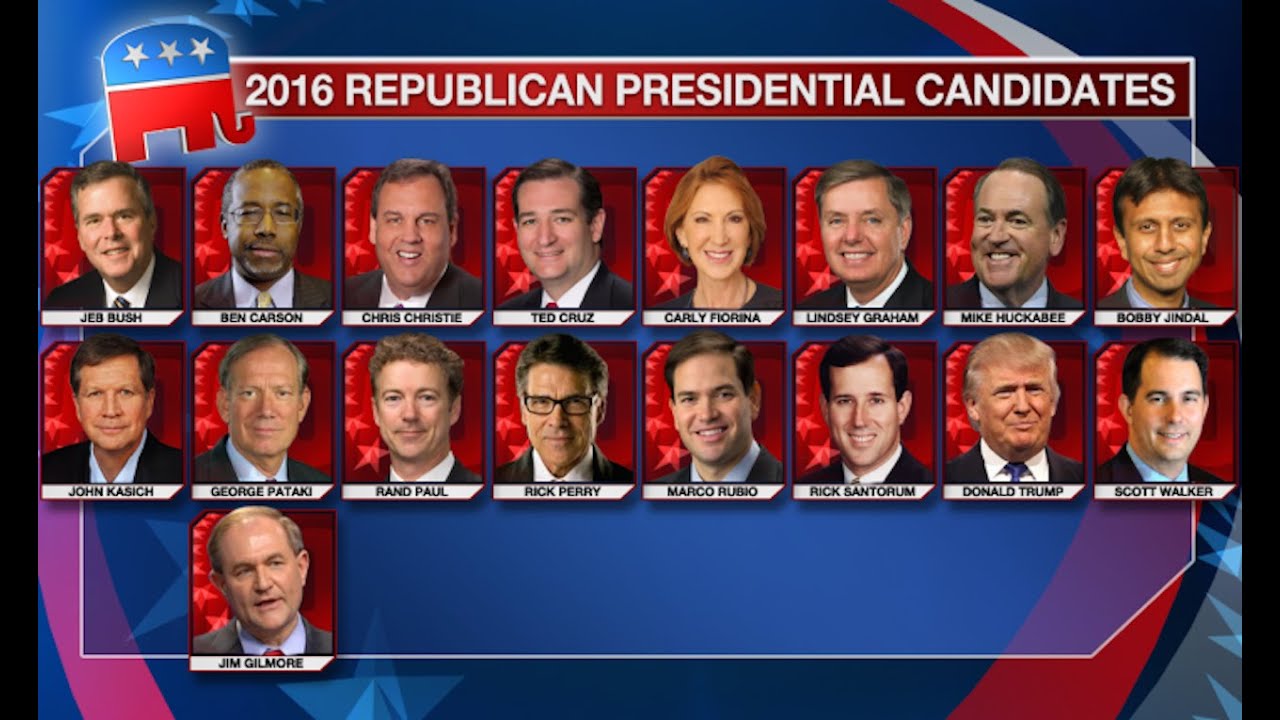
Fact-checking the 2016 GOP presidential candidates


PolitiFact has fact-checked each of the top 13 Republican candidates running for president. Now you can see how they all stack up on PolitiFact's Truth-O-Meter. 
Candidates are ordered based on the RealClearPolitics.com average of presidential polls as of Nov. 4, 2015.
READ MORE HERE

Wednesday, November 11, 2015

Where The 2016 Candidates Stand On Immigration, In One Chart

Immigration is shaping up to be one of the most contentious and emotional topics in the 2016 presidential race. It's also one on which candidates' views aren't yet fully formed.
As the rhetoric around immigration has heated up during this presidential campaign, many candidates' views have shifted ... and some still remain unclear.It turns out that nailing down candidates' stances on immigration is really hard. They change their minds (or, at least, their messaging) fairly often, and they place a lot of conditions on what they want: mandatory E-Verify, but only if the system is revamped to work better. A path to legal status, but only once the border is secure (which raises another question: Does "secure border" mean the same thing to everyone?).

But it's worth it to figure this out. After research and reaching out to campaigns, here's our rundown of where candidates fall on six different immigration policy questions. (We plan to do this for other topics throughout the campaign season, as well. Check out our climate change table here.)